
Buzz off! I am Safe. I am Just Reading.
Imagine if we could create a personal curriculum to learn more about ourselves, the body, home life, career, money, culture, spirituality or our relationships, lessons we create.

Hello Beezee Bees,
I recall the exact moment I started listening to my nervous system. Among the pages of Bryce Courtney’s novel (fave author!) I was reading and enjoying the story of Jessica, my nervous system started to buzz to tell me I was not safe here. I listened, I observed, I paid attention to buzzing in my vein. I actually wasn’t in danger and I was safe… on a couch … reading the words that describe the moment Jessica was bitten by a brown snake. Buzz off! I am safe, but something needs my attention here… what is it…I wondered what was my amygdala thinking…
The amygdala is like a vigilant little emotional pollen in the limbic hive, forever scanning the environment around us for those signals that might matter for our safety, survival, or general sense of “uh‑oh.” Neuroscience research shows that this almond‑shaped cluster of cells works closely with its neural neighbors, helping the whole system sort out what’s dangerous, what’s meaningful, and what deserves to be stored in the hive’s long‑term memory combs. It may be especially busy during fear of learning, when past experiences teach the hive how to react faster the next time something suspicious buzzes by. And if the amygdala could talk, it might mutter things like, “Did you hear that? That was definitely a threat,” or “I don’t know what that shadow was, but I’m sounding the alarm just in case.” Decades of studies even ones that directly poke at it show just how quickly this tiny sentinel can flip the lid on the body’s automatic alarm systems… so buzz off I am safe while learning.
…. but I wasn’t fine… I needed to pay attention to one of my life domains…
I introduced the concept of Seven Life Domains in the Free Creative Wellbeing Checklist and previous articles Boosting My Learning Strength with Creativity, and I Thought Compassion Meant Buzzing Until I Burned Out.
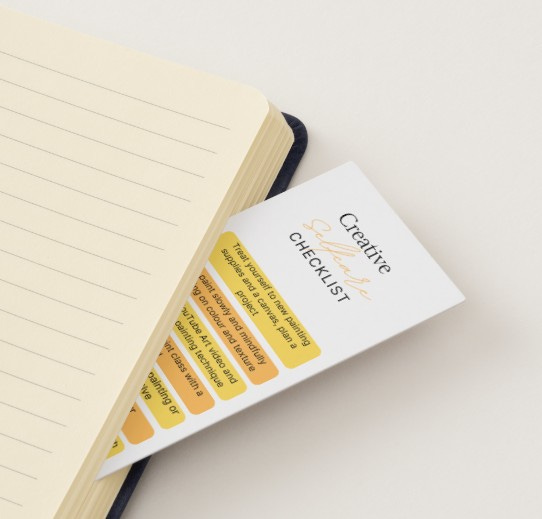
The Seven Life Domains provide a comprehensive framework to explore the multidimensional nature of wellbeing and identity. Grounded in evidence-based strengths theory and human development theory, these domains encourage reflection, alignment, and intentional action across diverse aspects of life.
Each domain represents a distinct yet interconnected sphere contributing to how we relate to ourselves, others, and the world around us. By engaging with these domains holistically, individuals can identify areas of strength, navigate transitions, and foster sustainable wellbeing.
The Seven Life Domains is the foundational template for living well and it include;
Body
Social Connections
Culture/Spirituality
Home
Community Living
Work/Study
Money
This framework is especially powerful when integrated into learning experiences, educational practices or coaching conversations, enabling individuals to approach challenges with guided curiosity.

When We Stop Pretending Everything is Fine
F*ck it feels good, because we take action, we start to focus on the areas of our life domains and look for change to improve how we feel. Yes, being honest with myself and my needs was a turning point for pursuing something meaningful to me…
…my ‘not fine’ was stuck in organisational chaos, structures and complex systems that just keep evolving and my body needed to stop… take a break… and focus on my doctorate journey…
Here I want to use my Work/Study domain for just a gentle moment…I think it is important because many mature aged students juggle work and study. Overload their time to respond to life that is filled with cost-of-living crisis, owning or renting a home, and supporting a young family or elderly parents. I want to gently direct your focus to my studying part of this life domain. The decision to return to university studies was not a mid-life crisis, just a re-evaluation of my purposeful work and my value alignment, I felt I lacked purpose and it just was not filling my cup anymore. Damn, I am just that little closer to death at midlife, so it was time to take a long hard look at my professional life more closely!
Returning to university was not easy, change is not easy, I honestly believe the core of it is our relationship with learning, lifelong learning, how we learn. I do not consider myself brainy, just passionate and determined. We [and those around us] shape our thoughts and beliefs about our own capabilities, learning and how we approach it - our thoughts [and people in our circle] can be very critical.
But one small change, for me, to build my confidence in learning was to learn about myself, with one moment, one thought and one feeling within.
What I discovered is I needed to build by learning toolkit, find the tools that would challenge my self-doubt, self-talk and obstacles that prevent me from moving forward towards my dreams. This toolkit started with understanding myself and how I learn NOW as an adult, mother, and a professional.
Building My Lifelong Learner Toolkit
Finding what tools, we have in our toolkit and what needed an upgrade was critical in my first steps of change. I needed to understand myself and stop living in the wisdom of others, I needed to understand my learning styles? In other words, it was time for me to dig deep and learn about myself and how I learn best. I needed to understand my learning needs and capabilities. Gentle, soft and encouraging thoughts and voice that lead me to discovering more about myself and how I best learn - not always positive but it has been a big part of my life.
I am sure I am in good company when I say I admit to googling and finding a YouTube clips or blog posts that sparks an interest, a photo, an idea, maybe it’s how to hang pictures on walls, how to style rooms or renovate my art studio, discover new painting tools or bohemian interiors! The proof is in my collection of my creative personal curriculum’s on pinterest. I am a collector of ideas.
Which has led me to continue to wonder about my learning style. Reflecting on my life as a learner (with a diverse range of interests) and I wondered how this has changed and shifted overtime. I love this illustration of student learning styles, so multidimensional and unique to us all.
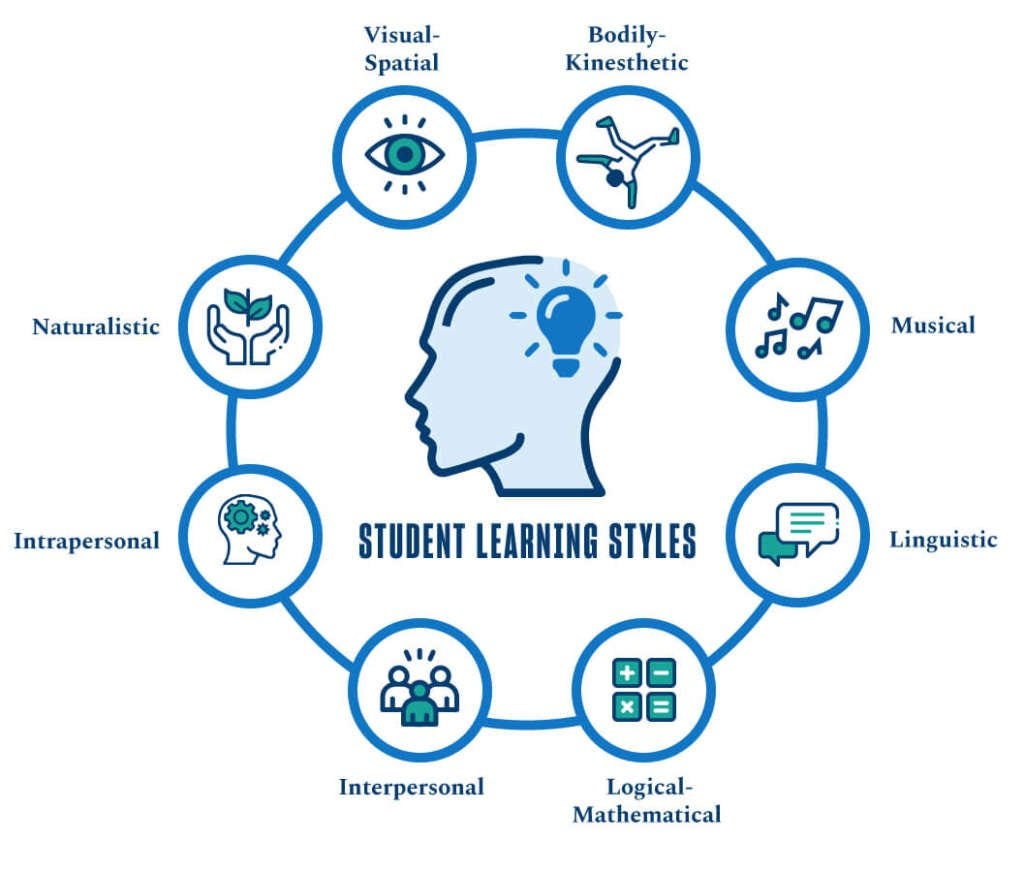
Sources: An Educator’s Guide to Teaching Styles & Learning Styles
The link takes you to the website for more insights if you wish to explore. BUT what I wanted to share is according to this research: Learning Styles, Preferences, or Strategies? An Explanation for the Resurgence of Styles Across Many Meta-analyses by John Hattie and Timothy O’Leary, learning styles reflect the different ways people prefer to absorb and work with information (words, pictures, sounds, letters, maps etc), and while research shows that no single style improves learning outcomes, the idea still helps adults recognise their natural preferences and capabilities - aka. making learning more accessible and enjoyable.
In simple terms some people respond best to visuals, others to conversations and stories, and many to hands‑on quizzes and practical tasks, or reflective approaches meaning questioning and wondering. What truly matters is offering variety, engaging experiences that help learners connect with new ideas and re-imagine what they already know. When adults can engage in multiple ways and feel supported, their confidence and curiosity naturally deepens, making learning more meaningful and lasting. I found this learning style quiz quite useful to help me on my way to discovering a learning style or a combination of my natural preferences.
If you have a preference for an online quiz this one is quick and evidence-based and easy to use.
Creative Anchor In My Personal Curriculum
This knowledge about yourself is my personal creative anchor in my lifelong journey of learning, my creative personal curriculum that shapes how I design, facilitate and participate in workshops and in life. When I was able to understand my own learning style, I gained insight into the kinds of activities, explanations, and structures that feel most natural and energising to me as a facilitator but also as a participant in learning. That self‑awareness helps me experience and choose workshops that support my authentic strengths and how I learn. Weather it is colourful visuals, rich discussion, hands‑on exploration, or reflective pauses while still intentionally weaving in a variety of learning activities that are engaging for everyone. Instead of limiting myself, by my learning style, it becomes a grounding point: a creative anchor that keeps me engaged in understanding diverse was of knowing, being and absorbing new information.
Knowing my learning style gives me insight into how my brain naturally processes information, and that self‑awareness becomes a powerful lens for understanding my stress responses or activation of my amygdala - FYI we all have one! When I am forced to learn, work, or communicate in ways that clash with my natural preferences, my cognitive load increases and so does my stress. It enabled me to rediscover my learning mojo!
For example, a visual learner stuck in text‑heavy environments, an auditory learner in silent independent tasks, or a hands‑on learner trapped in passive lectures will all feel tension, frustration, or mental fatigue more quickly. These aren’t personal failings; they’re mismatches between environment and individual preferences for learning.
On a closing studio note, learning how we learn has many benefits, communicating our preferences and incorporating them into a personal curriculum is a journey of creativity and wonder, one I hope you join me on. For now, tell your amygdala to buzz off, you are in good company and safe to build your personal toolkit.
if you wish to start your journey this year and map out your self-care goals in all of your Seven Life Domains. I have a free gift for you to help you with this goal and your journey, see below.

If you have been stung by learning mojo energy and keep buzzing through my articles…

