

PhD Journey #6: The recipe for successful thesis writing
A funny take on writing my methodology chapter, it serves one confused graduate researcher, and very supportive tribe of research coaches and academics.

Hello friend, I am so glad you are here…
Before you continue, I wanted to let you know that this is not for you if you find the word f*ck offensive it's used in this post. I know, I don’t normally swear but this situation really called for it. I am learning that I am not just learning, I am on a seriously, confusion, emotionally charged and time-consuming journey with many demands along the way. Not only am I battling the inner critic monsters every day, but I also have to contain them inside. I can’t do this anymore, I am ready to let them out, please meet my monster… they are kind of cute and cuddly bunch.

PhD Journey
I am at the stage of my research where I am thinking a lot, reading a lot more and spending too much time in my own head. Then I am pushing through the writing, reviewing my data with very little time for fun, family and friends. The pressure is real. Quietly without letting anyone know I am crumbling inside. My hubby asked: Are you okay Kat? I was ready to burst into a sobbing mess when Heath Franklin popped into my social media feed. WTF!

The universe showed me a sign, a path that I needed to follow. This is a light-hearted take on my thought process; navigating well intended feedback, advice, support and writing my chapter.
The Creative Stress Release
I usually cook nice meals over the weekend, it relaxes me, kids get involved by baking their own treats too. Flicking through my recipe book I quickly spiralled into what is my thesis recipe? Do I need one? Yes, I do. So here I am!
Ingredients
1 overly ambitious research question (slightly undercooked)
30 pages of thesis notes (well referenced, with a creative touch)
7 contradictory theories
1 Perfectionist voice (optional but recommended for flavour)
13 rabbit holes (freshly dug free-range preferred)
1 cup of I’ll come back to this later
A pinch of PINK song lyrics on beautiful trauma that doen’t quite fit
4 screens opened simultaneously while analyse my intellectually formed diary entries, thinking what did I actually do?
Half a citation, who is Hall 2001?
7 old versions of the thesis chapter filled same information but worded differently
2 tablespoons of wait…I have another idea!
Step-by-Step Cooking Method
One, preheat my brain to Overthinking (200°C).
Begin by asking a simple, innocent question like: What is the impact of trauma on learning? Immediately expand it into 5-part philosophical inquiries involving history, sociology, psychology, and whether cats have opinions about me.
Two, marinate in indecision.
Write my title. Delete it. Rewrite it. Replace it with Working Title (Temporary) this is its final form. I wonder what other tricky questions I will be asked? Is it clear? To me ….yes, to others no. Just copy’ titles.'
Three, mix everything into a chapter in a thoughtful way.
This includes adding every thought I have ever had, including:
Favourite lyrics of songs that plays while analysing data
Unrelated facts like why I am colour coding my text in pink, why not green!
A paragraph about how time is a social construct and wondering about who invented time because I have a bone to pick with them!
Don’t worry about structure. Structure is for people with direction. I clearly have none… yet! (better add the yet in so I can hold on to hope)
Four, introduce rabbit holes gradually.
Start with cats. Snowballed into these questions, this bit is important because it is also my sampling strategy:
Why do the fries taste so good at the uni café?
Who were the female researchers in the 19th Century?
Why do I find socks all over the house?
Why does the cat pee in my bed? (If you know why please let me know!)
Stir gently, be gentle with myself here, allowing connections to almost form, then abandon them completely.
Five, season with contradictions.
On page 12, confidently state a conclusion.
On page 13, completely dismantle it, with evidenced citation.
On page 14, apologise to myself, just everyone, keep saying sorry for misunderstanding.
On page 15, pretend none of it happened, start the next day with fresh hope I will finish it. Feel proud I am moving my writing forward. I am listening to my coaches, mentors and filling up pages with words (glad no one mentioned quality or placed high expectation on this bit).
On page 80, what's the research question again.
Six, add citations and consider structure but not important,
Find out what grey literature means and gather from various sources to widen my lens, don’t limit yourself to credible sources, get creative and include;
Random family quotes and jokes
Poems, one liners or statements AI suggested
Funny stories that are ethically flawed.
The goal is using creativity to discover my genius, not accuracy, leave perfectionism at the door. Maybe let it in sometimes and argue with it. Then slam the door in its face. This builds inner strength. Just don’t tell anyone or they might give you a diagnosis (it's not masking, just surviving societal judgements)
Seven, fold in emotional instability.
Sprinkle thoughts such as: This might actually be genius quickly followed by this is definitely nonsense then get validation from feedback.
Did cats invent post it notes? followed by Am I the cat? Well… I am a Kat.
Eight, let it simmer for 6000 words, remember what the clever coach said, just write!
It sounds like a Nike ads for a perfectionist. Just do it. Set the timer for 30 minutes and go! Then stop, be gentle with yourself, then harden the f*ck up and go again!
Write every detail of the process even the bits that don’t seem important now, they will be.
Share your ideas, then respond to feedback…My plan is to have one methodology chapter, no, split them into two, no, merge them into one
16, 000 words later, this is too long! It needs to be shortened.
Read more wider, more specific, just read.
Keep the tone confidently uncertain, inconclusive, open-ended. Stay true to your methodology choices.
There is no one truth, multiple truths exist – well said - stay within the constructivist theoretical framework, projecting X-File vibes of the truth is out there, love that show. Yes ‘I want to believe’ too.

Photo Credit: 'The X-Files': Vince Gilligan Looks Back on 'Bad Blood'
Raise more questions, question everything. What is truth? Why truth? Whose truth? Am I losing my sanity?
Remember to justify every decision you make during this process.

Nine, now stir in the synthesis of ideas
What? go wide, now narrow? now wide? now detail, that’s too much detail!
Write sentences and paragraphs that tell a compelling story, have a sound structure with no grammar or no spelling errors. Remember to proofread. Are they reinforcing perfection? Ok perfectionism is in again.
Be reassured this is an important part of the writing process. I am now developing a researcher identity. Isn’t this fun!
Stay resilient or leave.
Ignore all other responsibility including family, friends, personal hygiene, meal breaks or fun. Just write. Keep the dog and cat close for company. Since when did I have a cat? Side note: she arrived in April, remember she is homeless. Oh.
Ten, final touch: write conclusions, this is important!
End the chapter with an open-end conclusion to lead into the next chapter.
Done. Send. Bliss. Wait for feedback.
Serving Suggestions
Pair with icy dirty chai latte and optimism it will pass for intellectual work. Stay open to scrutiny and harden the f*ck up.
Best enjoyed by scholars who slowly flip through it, frowning and provide soul crushing critical feedback. This is character building.
Take aways (I have many)
A research blogger advised me I need to include takeaways. I am listening so here are my;
Humour is how we cope with despair. I inject it into teaching. My participant said. I listened. First timer in session.
Note to self: logic is overrated confusion that builds deeply humanised research output in an age of AI is critical for authenticity.
No AI was used to produce this written work or was it?
Challenge every idea, but what if…?
Apologise profusely so they don’t question your mental state, (mask it and ignore all professional advice) it’s called taking accountability, for my curiosity.
Book in a counselling session weekly, in the absence of this, harden the f*ck up.
Be resilient, if you don’t have it, quit now.
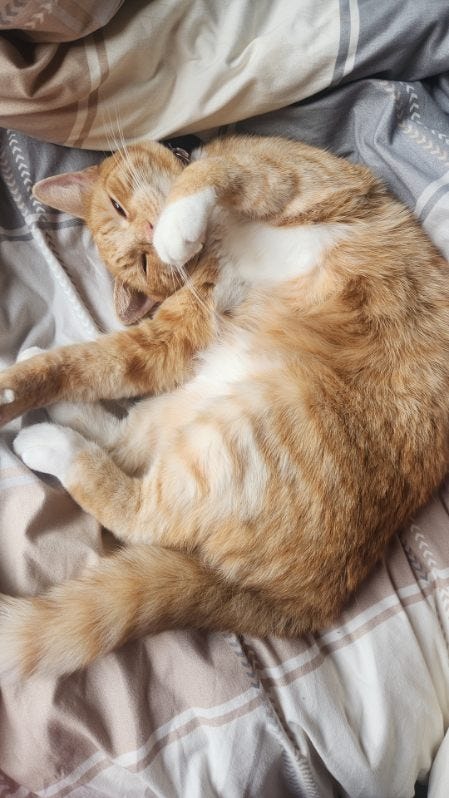
Peaches is living with us at the moment until her family finds a home.
How do you use humour?
Acknowledgements
This idea was inspired by reading Man With No Name and the use of humour in his publications as he shares his lived experiences of addiction and mental health. Funny man with a generous heart.
Thanks to Patrick LaRose coach, caring nurse, academic who supports PhDs. Legend and a really kind person.
A fellow PhD across the globe who is currently writing a thesis too Alina Bykova, her research related articles are The Arctic Files, absolutely fascinating. We are in the same boat!
A fellow social worker and lived experience of perfectionist during her PhD Melinda Lloyd 🌺 I really value your insight into your journey.
Continue reading…

Perfect Sunday morning journey. Thanks so much for sharing 💕
PS re: cat bed… probably because it’s soft? Mine has kindly trained me not to leave towels or laundry on the floor.
Instead she has a special soft rug covered by an absorbent liner. (I use disposable but there are also washable versions.)
A brilliant piece of writing and extremely funny. Thanks for the shout out 🙏