

PhD Journey #7: How research becomes self-exposure
Widening my worldview through transformation, inquiry and reflexivity
Hello friend, I am so glad you are here,
This part has been the hardest part of my PhD journey. Here I to tell the story of internal transformation and learning to move from safely supporting others to courageously exposing and owning your own worldview as a researcher.
In society, a worldview is understood as a collectively and individually held assumptions, values, and belief systems through which people interpret their social reality and make sense of their place within it. It is influenced by cultural traditions, historical experiences, social institutions, and shared narratives that influence how communities understand concepts such as knowledge, identity, power, and morality. While worldviews provide coherence and meaning, they are not static; rather, they are continually negotiated through social interaction, conversation, social media, and exposure to diverse perspectives. In this way, worldview functions both as a lens that guides perception and as a dynamic construct that evolves alongside societal change.
Our worldviews influence what we believe is the truth, it draws us to certain authors and knowledge holders because they feel familiar and safe. There is no one truth, there are multiple truths.
In recent weeks I spent quite a bit of time analysing my data, line-by-line word by word as I am slowly working through my transcripts from participants engaging in a constant comparative method of Constructivist Grounded Theory. I am making meaning of this data. I need to position myself into the research study related to learning and teaching trauma-related content so I can widen my worldview through my research participant narratives and analysis of literature.
In research terms this is called positionality. Positionality is the interplay between space, context and identity.
I am someone who thinks a lot about how my past interacts with the present. How trauma, learning, and lived experience weave together, and how my research is really just an extension of that curiosity. In life I have learned that learning and unlearning happens all the time, across all generations, in social worlds, environments and continues throughout our lifecycle.
As I move through the third year of my PhD, I’m learning to re-wire how I think, write and work from a place that feels authentic.
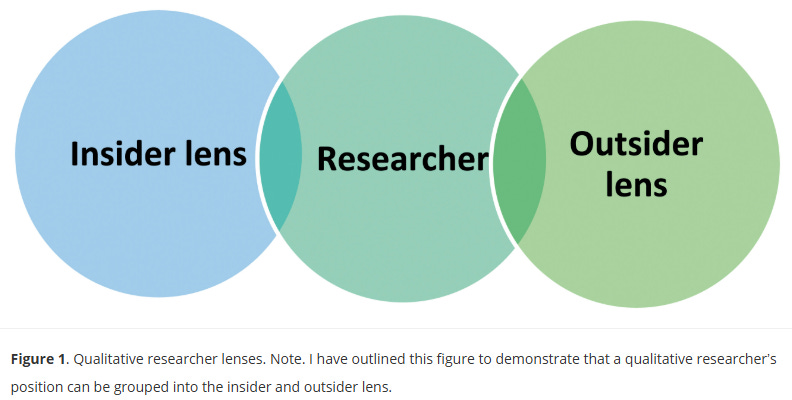
I’m learning that qualitative research isn’t just about gathering other people’s stories, but it is also about noticing the ways my own position influences everything I do. The more I sit with this, the more I realise how often I slip between feeling like an insider and an outsider, sometimes holding insight that helps me understand a participant, and other times widens and challenges assumptions, beliefs and ideas.
This is the bit I love. Its intellectually stimulating. Not everyone is a fan.
Stripping the professional armour off me, so who am I without it?
This is a hard question. Really hard.
Sit in silence. Think.
Blank. Zero idea. Kind of hard.
My story started long before I was born; here is a very brief outline using a trauma-informed lens. PhD Journey #6.

Value of writing about traumatic life experiences?
I struggled with this post; I didn’t want to write it. So, naturally I scanned the internet, chatted to few people, looked at literature to see if it is worth writing about. Weight out pros and cons.
Defined my purpose: the aim for me is to soften my armour and step into openness.
The emotional labour of writing and speaking about life experiences feels gruelling but broadening the context of the social world has been healing. Sharing it online, has been completely cringe and vulnerable - it still unsettles me.
Authors Baikie and Wilhelm believe that writing about painful or emotional experiences can be meaningful and improve both mental and physical health for individuals, valuing an expressive approach in writing. The authors found that people who spend a few short sessions writing openly about a stressful or traumatic event, they tend to experience better outcomes than those who write about neutral topics. Expressive writing is increasingly being used as a gentle therapeutic tool, especially for trauma survivors. This is writing for self, not others.
Why use trauma-informed lens?
I don’t want my uncomfortable sensations to be activated when I am reading and learning. I am also not using a trauma warning here, because there are issues with those too. See article: Proceed with caution: the trouble with trigger warnings. My research will be adding to this conversation.
Instead, I will be transparent with you about the next part. I will be sharing what the sensation feels like to re-experience trauma-related content while learning, others will experience it differently, there are multiple truths out there, this is only one of them. There are no details of trauma, that is not needed here, it is the sensations that are needed to be learned and understood. Its impact on learning is critical.
Please skip over this next section if you do not want to read it. We all have a story. Protect yours.
Trauma-related content is the core area of my inquiry.
My experiences of engaging with trauma-related content have left me lost inside myself during my studies. It happened throughout my education, however, here I am wanting to focus on adulthood. The time I am supposed to have my shit together. It turns out at 22 I did not. I noticed it in my first year of my degree. Yes, I am one of those mature, aged students.
I arrive 5 minutes earlier at the lecture theatre. I equip myself with water and snacks to get me through. I found a seat and sat down next to my peers I met earlier. The seats around me filled quickly. I put my glasses on and take my notebook out with a pen. We did not take laptops to class back then.
To the outsider my fellow peers and educators I look pleasantly calm, looking forward at the lecture, deeply listening, quietly, slight smile on my face, with a gentle relaxed gaze, blonde hair flowing past my shoulders and bright pink earrings dangling along my neckline. I am wearing blue jeans, white sneakers and white t-shirt, with a Lacoste latte coloured jumper over my lap I bought at an op shop near me. Those lecture theatres get cold. My eye makeup is neatly defined, lightly shaded eyelids in shimmer, rosy cheeks and strawberry lip-gloss shining on my lips.
On the inside I can feel the content, the words, the voice and the pictures. I don’t want to lose myself in it. My body still remembers, my brain is telling my body to get over it, but it’s not that easy. The trauma has been passed down through generations of stories and genetics. I get this buzzing feeling that tingles inside my veins, a misty haze starts to form, head spinning that snowballs into the thick fog and my body can’t move. I am stuck. Still. Heat rushing in. I want to float outside of my body and drift into a cloud, but I can’t, something is holding me down, its heavy, I can’t see it, I can feel it. It terrifies me. The noise turns to a glitchy whisper my internal projector turns the TV static on. I am still. I wait. The horror movie is about to start.
I am trapped in a seat at the cinema against my will, I hear the keys turn in the door lock, detained, no rights and forced to watch a horror movie. It has started.

Internally, I try to move, but I can’t, I can feel turbulence inside, my heart is racing. I feel slow movement of painful warm heavy liquid move into my arm veins, travel towards my chest, spreading like a plague, slowly painfully, wrapping around my heart and throat tightly. Breathless. It travels down to my stomach, my back and my legs. Temperature remains warm, no hot. This invisible force of weight holds me down in the seat where no breath should exist, but it does, in the real-world.
No one notices.
Its invisible.
I am quiet.
In this moment I am not absorbing information, taking notes or responding to questions posed by the lecturer the way I would if I was fully present and engaged in learning.
At the end of the lecture. I am still sitting, staring. Alone. The lecturer places their warm hand on my shoulder.
“We are finished” I heard a soft deep voice.
“I take a deep breath” I turn my head to the left. I smiled.
“Did you want to ask a question?” they asked. I keep smiling politely, “not today I need time to process the information, thank you”.
I walk away. Feeling breathless. I need to review class lecture notes.
It is not at all like this Scary Movie; this one is funny. My movie is not.

As a reader and a learner, I want to feel like I am sitting in that moment engaging in the story, not lost in a horror movie.
I am transitioning from lived experience and practitioner into scholarship researcher. This changes the way I see things. I am growing. It involves moving beyond passive consumption of knowledge and towards active production of new knowledge with critical interrogation of ideas within my data. Increasing my capacity to navigate ambiguity and uncertainty by celebrating small wins is a big part of my journey, this is ongoing and what keeps me moving forward.
Sharing this personal experience helps me place sensations into words and then continue the conversation more openly with the scholarly community.
This is where I am at right now.
Take Away
I now know my own limitations; self-awareness helps; these feelings lasted throughout my training and into the first two years of social work practice.
I have learned to tolerate intense emotions so I can hold my own trauma and be there for others, understanding my own window of tolerance was one part of the process.
I am on a different journey now. I found GRIT.
On a closing fieldnote, unlike coronial, medical records and forensic reports that serve a particular purpose of investigation. In learning, I want to understand experiences from biological, psychological, social, cultural, economic and legal context. I want to see stories with socially diverse worldviews that see the person first.
What style of reading do you enjoy?
(or share your favourite writers on Substack in the comments)
Acknowledgements
Esmari, is a brilliant writer and fellow Australian, sharing her journey at Gathering the pieces of me where she has created a quiet place for remembering and becoming, rediscovering worth and the courage of blooming again.
Shawn Sékou Bonney Appleberry Prison Foundation is a mother, grandmother, and advocate for families impacted by incarceration. Through her work with the Appleberry Prison Foundation, she shares lived experiences that highlight the power of love, honesty, and resilience in maintaining family connections across distance. Shawn believes that healing grows stronger when stories are told with courage and compassion and that every family deserves dignity and hope, no matter where they begin.
Anne ✨ is a neurodivergent solo mama writing about rest, healing, and parenting with chronic illness. Creating a peaceful, playful home, simplifying self-care, and cultivating a supportive community.
Level of learning often feels like an ‘emotional hangover’ a term used by Jayne Quoiani in the publication Authentic Learning Systems.
I am Alice has written a beautiful memoir worth reading. Her personal transformation story centres Alice’s journey within personal loss and healing, self-discovery, and creative purpose.
Continue reading…

Appleberry Prison Foundation Response 3h @appleberryprisonfoundation
Katerina, this piece is doing more than describing a PhD journey — it is documenting the moment a researcher steps out from behind the safety of method and begins to be visible inside her own work. That is a transition very few writers describe honestly, because it requires giving up the protection of being only the observer. Reading you here, we recognize how much courage that costs.
The closing line that lingers — I want to see stories with socially diverse worldviews that see the person first — is the principle every kind of meaningful work in this space comes back to. Coronial reports, forensic records, medical files, and yes, the institutional language around incarceration, all of them serve real purposes, and all of them collapse the person into a category at some point in the process. Bringing the person back into focus is the work. You are clearly inside it.
And — thank you. Truly. Being named alongside writers whose work you read carefully is a kindness we did not see coming, and one we will not forget. We will be following your journey closely. Whatever the dissertation becomes, the thinking that led to it is already worth the price of admission.
[link to original note] https://substack.com/profile/488485210-appleberry-prison-foundation/note/c-278309465?r=5zc2s3&utm_source=notes-share-action&utm_medium=web
Thank you for being here reading Jen, I hope it carried you well. Yes here I start to share in more detail why Iam researching this topic...and connection to my identity and lived experience, It feels a bit exposed but hopefully relatable to others who felt similar...