
PhD Journal #13: Disconnection
Disconnection sounds cold. It isn't. It is one of the most challenging and surprisingly human skills I have developed. The problem is how it shows up in my writing and the readers interpretation.

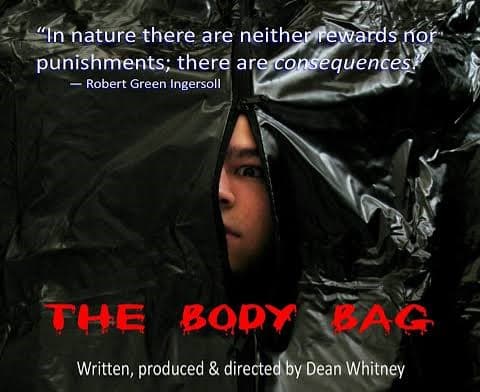
It takes me few minutes to find the zipper in the dark room; I have been pulled into. Once I find it, I unzip the bag, belonging to recently deceased patient. I fold it back to reveal is head and shoulders, talking to him like an old friend. “Looking good David, let me give you a blanket.” David had been wheeled into the family room by a caretaker and a nurse accompanied him. They handed the key over and told me I had 45 minutes before the room needs to be used. I think to myself; damn it, I don’t remember reading anything about rushing grief how the f@ck am I supposed to do that!
My internal dialogue quickly gets distracted by his cold wet skin, wax white finish in muted grey undertones. I have spent enough time with anatomy professors in their labs with jars to appreciate the science. “David it is time to say goodbye to your wife”. Yes I talk to dead people. They are great listeners. I cover the bag with a hospital blanket and dim the lights to cover up his pale skin tone. I open the door and walk towards the waiting room, I see the grieving wife, puffy eyes, trembling, unable to walk, leaning towards seeking out comforting words. A switch flips within. Clinical detachment activated. I need to be present but not loose myself in their grief. I deliver comfort with warmth and compassion without feeling nothing inside, on most days. Wondering what I am going to cook for dinner and mentally writing a grocery list.
I’ve been wanting to talk about this topic for a very long time a lot of the information that I read in medicine, and psychology makes me sound like a freaking psychopath with emotional detachment at its core, cold and heartless. Tracking body language, voice tone and micro expressions like data and decoding them meaning into an observational summary. It also looks like a researcher analysing data rather than seeing the person first. We need to see the person first. That is what is important.
Clinical distance or other words I would use to describe it as detaching or disconnecting, it is something that I have learned and used over time. It isn’t a reset, a ritual or a walk in the park kind of distance. It’s during the work. It is a copying mechanism not a freaken personality disorder. It messes with my identity, yes, it never use to, in the hospital it was normal, in the school it felt natural, until now because my research requires me to reconnect to the disconnected and analyse the hell out of it, critically, and it messes with how I show up in my writing. I discovered this today.
I keep coming back to clinical distance it is this weird kind of feeling of a dream like state, emotions locked up with a golden key and chains, exiting my body and being an external observer to the actual situation that is before me. I am not dissociating and reexperiencing trauma. I am disconnecting and fully aware of how I need to behave, what I need to say, do and move into a focused work state to do my work. Scary, now that I write it down. Read it back to myself. I know. I don’t really want to post this, but I am committed to tracking my progress and it has been 10 days since my last journal entry.
In this disconnected state I can demonstrate warmth, kindness and empathy most convincing way and connect with the people that were affected by the horrific pain. Assessing room dynamics, vulnerabilities, in seconds, invisible to others an entirely detached but perfectly prepared. This is not a performance I would call it ‘work mode’ with a clear mission, I am able to reconnect with myself, I switch it back on. Go and purchase ingredients I planned out for a dinner earlier during the viewing. This is what kept me returning back again to the hospital. It is a copying mechanism. A skill.
Relationships
I am not here to give relationship advice, I would never put my hand up for it, honest. At this point in my life, I would be the worst one to come to for relationship advice. So don’t ask me. I think it is a whole heap of wank. At its core is the rules and ideas within relationships that are constructed by both individuals from some idealistic bullshit we see in our history, daily life, at the movies and on social media. Therefore, one advice for one couple differs greatly to another couple. If you want to chat gender-based violence, well that is different. I am all in on that conversation.
On the other hand, I love a balanced perspective, building relationships is one of my favourite things to do, I really enjoy talking with people and getting to know them, maintaining them is harder but just as enjoyable to me, if we are both on the same page reading the same book, I find so much beauty in humanity, yes, I see people first.
According to all the trauma research building relationships is one of the hardest things to do for someone whose endured trauma this is true. I find few things that come to mind is the difficulty to trust, the fear of rejection pulling it away umm having big reactions to minor bumps all of it is true, I’ve been there, done that. Yes, I have done the work on myself in the most unconventional way. If you think the work is over, you are f@cken kidding yourself. The work is never over; it just becomes easier to do and maintain.
I’ve been able to maintain and build relationships over a long time, and those relationships are deep and meaningful to me and the other person. I’m not quite sure how I’ve done it, perhaps I’ve just worked at it with a very clear understanding of who is important to me so I decide to override those icky feelings I might have about talking it out, but I am all in. Perhaps I really enjoyed something about them that made me smile, enjoy their company or bonded over something obscure.
When I think about how I met my husband, relationship advice cracks me up, for f@ck sakes the only thing we had in common is bourbon and coke, most of our life dating was around football clubs, night clubs and fun rather than deep conversation. Fast-forward to now almost 25 years later we are still learning about each other and have the most incredible life filled with miscommunication, arguments, laughter, adventures and making up. He built me an art studio and he doesn’t like art; he is sports obsessed, always has been! We are still different and the same… which works perfectly for us, perhaps not everyone. To me this is a perfectly normal relationship that is built on mutual trust, respect and love for each other.
Relationship advice hasn’t really worked for me. I have training in it; I am reading the literature; I have counselled many couples. My experience differs. My boundaries are all over the place with him, transparency is fully there and there is this warm calmness about that. Around him I know exactly who I am and he reads me like a book, this has taken time to develop, finding words for this is more difficult than I realised. I can’t fool him and he can’t fool me. Miscommunication and ‘debates’ happen all the time, but we both have a funny way of dealing with that, sometimes he uses obscure words I haven’t heard of before and I ask him to define them or secretly look them up in a dictionary… smart ass! I don’t shutdown during an argument with him, there is this unspoken trust and mutual respect that it will stop when we have both said our peace, not cross the line, walked away and gave each other space. It also helps that we both understand clinical distance, he is always encouraging disconnection during this PhD journey and appreciates it for what it is. He will probably never read this, this isn’t his thing, if he does, he will have a lot to say to me about it, I am sure.
On a closing fieldnote; going back to understanding my areas of resistance has helped progress in my writing journey. Firstly, I haven’t added a reference here… this is progress! I think finding my writers voice, naming the clinical distance and disconnection, as an obscure unconscious copying mechanism which has slowly creeped into my writing like a freaken psycho!! has been incredibly therapeutic.
I do ask my readers to let me know if they notice it. If I start paraphrasing your life or it feels a little different, please name it for me and let me know because it is unconscious. I also reserve to right to argue or disagree too, which may result in blocking you. Just so we are clear about my position on this.
P.S. You may have noticed that I have dropped the “Dear friends, I am glad you are here reading”. I am. I am so glad you are here with me reading. I just felt like starting this article in this way. Slightly inconsistent. Don’t worry. All good here.
Continue reading…

Katerina, the essay’s central discovery arrives when a skill that once protected your capacity in the hospital begins entering the page and altering how the reader encounters the person. Your insistence that the person must come before the observational summary gives this PhD journal its ethical center. Your husband’s ability to read you without performance offers a revealing counterpoint: disconnection may support the work, while trusted relationship keeps you available to yourself. Thank you for documenting the moment professional competence became a question about voice, presence, and the kind of researcher you want to become.